Comparison
Smart film vs blinds and shades
One is a window covering. The other is the window doing its job better.
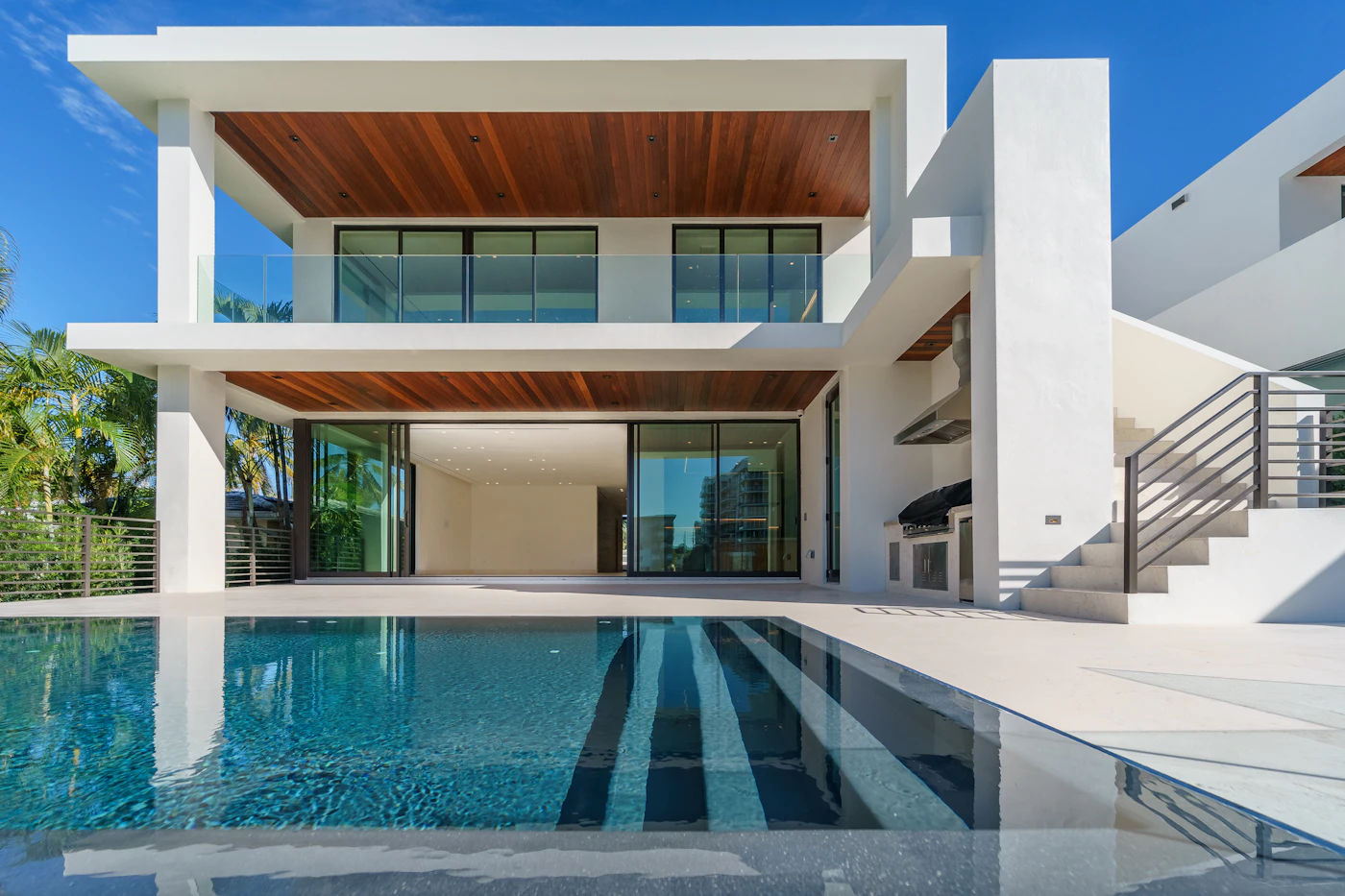
Interactive visualization — not a photograph of a completed installation.
Motorised shades are excellent products. They control glare, they darken bedrooms, and they handle enormous spans. But they also add a header, a pocket, a fabric plane and a maintenance item to a room that was designed around a clean glass edge.
What each one is actually good at
- Room darkening for sleep
- Shades — smart film is not a blackout product
- Glare control on a west elevation
- Shades or solar film
- Instant privacy without covering the glass
- Smart film
- Wet areas and shower enclosures
- Smart film — no fabric, no cords
- Frameless or minimal detailing
- Smart film — nothing added to the opening
- Very wide spans
- Shades, or multi-panel smart film layouts
Appearance and interior design
In quiet-luxury interiors the goal is usually fewer objects, not more. Smart film removes the header detail, the fabric colour decision, the visible track and the dangling wand from the room entirely. The glass simply changes.
It also removes a cleaning problem. Fabric in a coastal humid climate collects dust and salt air; glass does not.
Where they work together
Plenty of good projects use both: smart film on bathroom and entry glass where privacy is instant and occasional, shades on bedroom and west-facing glass where light control is the real requirement. We are happy to tell a client that a shade is the right answer for a particular opening.
FAQ
Questions, answered directly
Keep reading
Related pages
Next step
Schedule a smart film consultation
We review your glass, wiring path and control preference, then give you a planning range and a realistic programme.